Wednesday, 30 January 2013

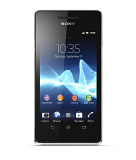
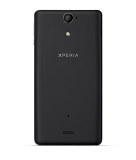
Sony Xperia V review

Introduction

It won't be long before those full-HD five-inchers start stealing the show and the older Xperia generation should be preparing for life in their shadow. It doesn't mean though that the Xperia V cannot hope for a good time.
We don't see why a phone with dual-core Krait and an LTE connectivity shouldn't enjoy life in the midrange. OK, the upper midrange - but the Xperia V isn't easily caught off guard. Of course, people are not as easily impressed today as, say, a year ago. Yet, a select few phones are willing to offer 1080p videos and 13MP stills, while putting an HD touchscreen at your fingertips.


Sony Xperia V water-resistant phone

And there's more to the Xperia V than that. It's more durable than your average smartphone without looking like an army bot. You should've figured it by now, what we have here is a dust and water-resistant Xperia T with 4G connectivity and a tad smaller screen. Oh, well they needed to make sure the wetsuit would still fit the user.

Key features

  • Quad-band GSM /GPRS/EDGE support
  • 3G with 42.2 Mbps HSDPA and 5.76 Mbps HSUPA
  • LTE Cat3 DL 100 Mbps UL 50 Mbps
  • 4.3" 16M-color capacitive LED-backlit Reality LCD touchscreen of 720p resolution (720 x 1280 pixels) with Sony Mobile BRAVIA engine 2; Scratch-resistant glass
  • Android OS v4.0.4 Ice Cream Sandwich, Jelly Bean coming up
  • IP57 certified for dust and water resistance, up to 1 meter immersion for 30 minutes
  • Dual-core 1.5 GHz Krait CPU, 1 GB RAM, Adreno 225 GPU, Qualcomm Snapdragon MSM8960 chipset
  • 13 MP autofocus camera with LED flash and geotagging, Superior Auto mode
  • 1080p video recording @ 30fps with continuous autofocus and stereo sound
  • VGA front-facing camera
  • Wi-Fi a/b/g/n with DLNA, Wi-Fi Direct and hotspot
  • GPS with A-GPS, GLONASS
  • 8GB of built-in storage, microSD card slot
  • microUSB port with MHL and USB-host support
  • Stereo Bluetooth v4.0
  • Standard 3.5 mm audio jack
  • Stereo FM radio with RDS
  • Voice dialing
  • Deep Facebook integration
  • PlayStation Certified, access to the PS Store
  • Accelerometer and proximity sensor
  • NFC connectivity

Main disadvantages

  • No JellyBean at launch
  • Relatively modest battery capacity
  • Video recording fails to impress
  • No hardware shutter key
  • Comes across as overpriced
The one thing that doesn't help Sony look particularly good is the tardy arrival of the latest software. The Xperia V is still to get Jelly Bean - and it will most likely be JB 4.1. There have been reports of Sony pushing back the Xperia V's launch on certain markets to put the latest software in. That makes sense but is perhaps part of the reason for the limited supply, that's been keeping prices quite high.
A bit of a vicious circle there, not too good for Sony, but hopefully not for long. Hopefully, the Xperia V should be getting the Jelly Bean treatment as early as February.
Sony Xperia V Sony Xperia V
The Sony Xperia V at HQ
Elsewhere, the Sony Xperia V makes a pretty strong case for itself. The HD display is looking good, the camera on the back is ready to serve 13MP stills, there's LTE and the dual-core Krait is humming along. And the Xperia V is ready to take calls at the poolside or in the shower.
Sounds like an exciting package, and good-looking too.

more details continue as shortly..keep on touch with me

Monday, 28 January 2013

Sony Xperia Z Video Review & Technical Specifications

Sony Xperia Z Video Review :


Specifications :

Weight :

  • 146 grams
  • 5.15 oz

Dimensions

  • 139 x 71 x 7.9 mm
  • 5.47 x 2.79 x 0.31 inches

Battery

  • Talk time (up to): Up to 11 hours [1]
  • Standby time (up to): Up to 550 hours [1]

Display

  • 5.0 inches TFT
  • 16 million colours, 1920 x 1080 pixels

On the inside

  • Google Android 4.1 (Jelly Bean)
  • 1.5 GHz Qualcomm APQ8064+MDM9215M Quad Core

Camera

  • 13.1-megapixel camera with Auto focus
  • 2 MP, Exmor R, front facing camera (1080p)

Durability

  • IPX5/7 (Water-resistant) & IP5X (Dust-proof) [2]


Sunday, 27 January 2013

Sony Xperia Z -Experience the best of Sony in a HD smartphone

Xperia Z -Front and Back Side view


Xperia Z for up to half an hour and it won’t be damaged; taking it out in a sandstorm and the dust won’t get in. The design may be minimalist chic but this is a phone that realises even careful consumers can sometimes be rough. It’s the first I’ve encountered that’s both this rugged and this stylish.

Nonetheless, at its heart the Xperia Z is just another Android phone – standing out against the excellent Samsung Galaxy SIII, LG’s Nexus 4, made in conjunction with Google itself, and HTC’s One X+ is a challenge.

It’s one that in the brief time I’ve spent with the Xperia Z, Sony seems more than ready to take on. Its 5” screen is as good if not better than any currently on the market elsewhere, its camera is a 13MP beast that takes superb images in low light and normal conditions. But with its big display and its rectangular shape, the Xperia Z feels like a particularly big device. If you're used to the Apple iPhone, even in its latest incarnation, the difference is stark.

Perhaps most significant, however, is Sony’s bid to get users to engage with its content: recommending what you should watch from its vast library and allowing it to work as a remote control for your TV. If Sony can convince viewers, then the Xperia Z is a lot more than just a phone.

Super clear, super black

The OptiContras panel brings you clearer images when on and a seamless black look when off.

Stunning photos and videos in any light

Our smartphone cameras are built with the same expertise and components as leading Sony cameras, to bring you ultra-sharp photos and videos, wherever and whenever.

HDR video camera

Xperia Z has the world’s first Exmor RS mobile with HDR for video, so you can take beautiful stills and movies even against strong light.

13-megapixel camera

The 13 megapixel fast-capture camera and the next-generation Sony Exmor RS for mobile sensor makes Xperia Z the Android mobile that delivers crystal clear photos wherever, whenever.

Great in all light conditions

With Exmor RS for mobile and HDR, Xperia Z takes sharp photos and videos both in lowlight and strongly backlit conditions. The lowlight sensors on front and back make it the first dual Exmor R for mobile camera.

Superior Auto

Not a pro with settings? Superior Auto mode automatically activates HDR and noise reduction when they’re needed.

Smart, sleek & durable

No one knows how to best pack durability into a beautiful design like Sony. The slim 7.9 mm body, with its reflective glass surface, looks and feels slick, but Xperia Z is crafted to be water-resistant, dust-resistant and tough enough to handle whatever life has planned.

Water-resistant

How can we be certain? In order to get the high IP55 & IP57 rating, we submerge Xperia Z under water for 30 minutes – and make sure it’s good as new when it comes out. It’s also resistant to water jets!
 

Tough as metal

How solid does a precision engineered smartphone need to be? How about as solid as a car? Xperia Z’s frame is made from glass fibre polyamide, the same material that’s used as a metal substitute in automobile parts.

Durable glass

The durable tempered glass on front and back is a lot stronger than conventional glass. And with anti-shatter film on the front and back, Xperia Z is anything but fragile.

Dust-resistant

Since we can’t take every Android smartphone outdoors, we bring the dust tests to our labs. Before we label Xperia Z dust-resistant, we hang it in a dust-test chamber and make sure its operation is unaffected.

OmniBalance design

The design is focused on creating balance and symmetry in all directions. Xperia Z has beautiful rounded edges and smooth, reflective surfaces on all sides, which are held together by an innovative skeleton frame.

One touch to entertainment

Discover the easy and fast way to wirelessly share music, photos, videos – or anything that’s on your smartphone screen. One-touch mirroring with NFC technology lets you easily see all the content on your phone, on your TV. Just touch your phone to your BRAVIA remote control and watch your game, photo or movie pop up on the TV screen. No cables, no buttons, no confusion.

The Sony smartphone that’s anything but mundane

A screen so immersive you can get lost in it, images so real you feel like you’re there, and a camera that lets you capture the moment whenever and wherever it occurs. See how Xperia Z takes you to new places, and lets you connect in totally new ways.

Smartphone with super power

The Snapdragon S4 Pro quad-core processor gives you super-fast performance, unparalleled graphics and efficient battery use. Find your way on Google maps. Stream the latest YouTube clips with LTE. Or download the newest apps and run them without a hitch. Get it all when you want it – now.

Better battery life

With Battery STAMINA Mode you have more intelligent battery management and can easily improve your standby time by four times or more*. Your phone knows when you’re screen is off and shuts down the battery-draining apps you don’t need, then starts them up again when the screen is back on.

Entertainment audio

Xperia Z comes with a high quality stereo headset.
Sony MH-EX300AP headset has superior acoustic performance which helps realise sound true to the original recorded sound.
Get the most out of your music, games and films. An in-ear headset that’s designed for a premium comfort fit lets you enjoy quality entertainment audio. And when a call or message comes in, you’ll know.

A screen as impressive as HDTV – Full HD Reality Display

Feel like you’re there with the razor sharp and super bright full HD screen. Xperia Z brings you the highest level of HD available – 1080 progressive scan, for incredibly crisp pictures and no jagged edges. Expertise from our BRAVIA® TV engineers goes into our mobile screens, to bring you the same quality you’d expect from a top quality HDTV. The 5” full HD Reality Display also has very high pixel density – 443 pixels per inch, for razor sharp pictures – and superior brightness. And with the wide colour gamut it gives you the widest colour spectrum, so you can view every detail in vivid colour.

True Screen intelligence – Mobile BRAVIA Engine 2

The second generation of our acclaimed Mobile BRAVIA® Engine, Mobile BRAVIA® Engine 2 delivers an even better viewing experience by adding new real-time contrast optimisation to the sharpness enhancement, high-quality colour management and noise reduction. Mobile BRAVIA® Engine 2 is also able to analyse content type and adjust the image accordingly. Adding Mobile BRAVIA® Engine 2 to the Reality Display makes for the most intelligent smartphone screen – one that adapts automatically to display your content in the best way.

(1) Contrast enhancement

Contrast in images and video is enhanced by making the darkest parts slightly darker, which brings out details in the picture.

(2) Colour Management

Colour saturation is increased for specified colour ranges, which makes the colours deeper and more vivid. And the intelligent Mobile BRAVIA® Engine 2 software reproduces skin colour exactly as it appears to the naked eye.

(3) Noise reduction

Distortion and noise is reduced when streaming low-quality video from online sources, such as YouTube. Noise is reduced both to individual frames and between frames, for clearer viewing.

(4) Sharpness filter

Mobile BRAVIA® Engine 2 applies a sharpness filter to increase the overall detail level in the image. This is done by enhancing the edges and contrast without increasing noise
Here then i will share more technical details next review...


Friday, 25 January 2013

Latest News - Nokia ends Symbian era

Nokia ends Symbian era

Nokia confirms return to profitability as it also kills of its Symbian smartphone operating system.


 In its earnings announcement, Nokia confirmed that the 808  was the last new device.

“During our transition to Windows Phone through 2012, we continued to ship devices based on Symbian,” the company said. “The Nokia 808 , a device which showcases our imaging capabilities and which came to market in mid-2012, was the last Symbian device from Nokia.”

The manufacturer had previously noted that Q4 2012 was the “last meaningful quarter for Symbian”, and today’s confirmation was not a surprise to industry observers. Nokia's results confirmed numbers it released earlier this month while also adding that the firm is now back in profit.

The $585million profit was boosted by a decision to sell of its headquarters; the company now has £4billion in cash.

The 41-megapixel used technology that is now starting to appear appear in Nokia’s Windows Phone-based Lumia handsets

Thursday, 24 January 2013

Review OF The HTC One SV


Introduction

The HTC One SV isn’t the most exciting phone ever to be launched but, with it available on EE’s 4G network, it currently offers among the cheapest ways to get free phone with a 4G contract here in the UK. But, is it a sensible purchase? Let’s take closer look.

Design

 HTC One SV has a smart and quirky design. From the front it has something of the iPhone 5 about it thanks to the slimmest of slim black plastic trims surrounding the glass of the screen. Meanwhile the back features a curved matt-white plastic cover and the sides are finished in silver. It‘s an arrangement that works very well giving the phone a reasonably classy, understated look much like the HTC One X.

There is one glaring issue, though, which is the slot cut into the screen where the earpiece speaker sits. It’s absolutely enormous with straight-cut sides (rather than sloping) so picks up dust and other detritus really easily. It even has multiple smaller holes deeper within it to really make sure that lint can’t escape. Although this shouldn’t affect the function of the phone, when full of muck it does look a bit crummy.

As for build quality, although largely plastic – aside from the glass screen – this phone still feels well made, and in fact puts the likes of the Samsung Galaxy S3 to shame for managing to make plastic feel premium. Little details like micro-drilled holes for the speaker really help create the sense that this phone is carefully crafted rather than thrown together on the cheap.

The form factor is also very nice. With a 4.3in screen this phone isn’t overly large, and thanks to rounded corners and a gently curved back, it fits nice and snugly in the hand. Also, when using it one handed, most of the screen and the buttons fall within reach of your thumb, making it comfortable to use. The only slipup here being that HTC has put the power button on the top edge where it requires a bit of a hand-shuffle to reach. 

Potentially of concern also is that HTC hasn’t followed Google’s latest guidelines for Android which stipulate that the main navigation buttons (Back, Home, Multi-tasking) should be on-screen as part of the interface (like on the Google Nexus 4) rather than separate buttons. Instead HTC has, like on the HTC One X, added three touch sensitive buttons below the screen. These are easy to reach and activate but we certainly don’t feel they’re any better than the standard Google method.

Overall, though, while the slightly quirky nature of the HTC One SV may not be to everyone’s taste, for a relatively low-cost phone, it’s off to a good start.

Features

Further enhancing this phone’s appeal is its removable back. Peel this off and access is granted to the battery, microSIM slot and microSD slot. So, if you’re able to get hold of a spare from somewhere, theoretically you can swap in a spare battery to keep the phone going for longer. Also, and perhaps more importantly for most people, you can upgrade the phone’s storage. There are 8GB of memory built in but up to 32GB microSD cards can boost this to a total of 40GB – plenty for a large music collection and still have room to take loads of photos and videos of your friends and family.


Elsewhere this phone has on its bottom edge a microUSB socket for charging and data transfer as well as the main microphone. Then on the right is the volume rocker while up top is the power button, headphone jack and second microphone which is for noise cancelling purposes

You’ll also notice Beats Audio branding on the back of this phone. As ever with most of HTC’s Beats Audio handsets, this doesn’t mean anything other than there’s a Beats Audio EQ setting that you can enable, which pumps up the bass, treble and overall volume for a more in your face sound.  It can add a bit of life to some more sedately mixed tracks but generally we preferred having it turned off.

Key Features: 4.3in, 480 x 800 pixel screen; 1.2GHz dual-core processor; microSD slot and 8GB built-in storage; Android 4.0 Ice Cream Sandwich; 5MP camera with 1080p video 

Sunday, 20 January 2013

Google confirms Android 4.2 Bluetooth streaming flaw

Google confirms Android 4.2 Bluetooth streaming flaw
Google Nexus

Google has admitted that its latest Android 4.2 Jelly Bean software release carries a bug that prevents devices running it from operating Bluetooth-connected devices correctly - and promises that a fix is due shortly.

Android 4.2 launched with the cut-price LG-manufactured Nexus 4 smartphone, adding a wealth of new features including a 360-degree panoramic photo mode and support for multiple user accounts on tablets to the existing 4.1 OS. It is currently only available on Google's own-brand Nexus products - including the Nexus 4 smartphone and the Nexus 7 and Nexus 10 tablets - with third-party manufacturers working to bring the new features to their own devices as soon as possible.

Those who have taken Android 4.2 on board, however, have been left with a flaky Bluetooth connection that causes audio drop-outs when streaming using the Advanced Audio Distribution Profile (A2DP) support built in to the operating system.

The problem, which may have been present to a lesser extent in Android 4.1 but which is causing severe heartache for early adopters, makes audio streaming via Bluetooth almost unusable on the device, with severe lag and frequent cut-outs. Numerous reports have been made by users to Google through the official bug-tracking service, and now there's an official response: the flaw is confirmed, and a fix is due.

Responding to customer complaints, a Google spokesperson admitted that the Bluetooth software stack in Android 4.2 has a glitch - but that the problem has been tracked down and eradicated. "We have fixed the A2DP streaming stutter problem on N7 [the Google Nexus 7]" the spokesperson told complainants. "The next release [of Android] should have the fix. Sorry about the problem." While the spokesperson talks of a Nexus 7 fix, the current generation Nexus devices share a common software stack - meaning the same fix should also apply to the Nexus 4 and Nexus 10.

That next release, Android version 4.2.2, has not yet been given a timescale for release, but Google is likely to be rushing this one out of the door ahead of numerous cut-price tablet launches that will tempt buyers away from its Nexus family of devices.

Saturday, 19 January 2013

Google Nexus 7 review

                          Android has blossomed on smartphones in the last couple of years, with Google-powered handsets outselling everything else. Despite this, the operating system has struggled on tablets, with sales remaining well behind those of the mighty iPad. Big-brand manufacturers struggled to create compelling devices to undercut the Apple tablet, largely due to the fact that they weren't getting a cut of any app or content sales further down the line. Budget devices, meanwhile, were often of poor quality, didn't come with key Google applications and used outdated versions of the operating system. Something had to change.
Google Nexus 7
Could the little Nexus 7 be the tablet turning point for Android
                       It now it has, with Google launching its first own-brand tablet, the Nexus 7, which looks to be the answer to all of Android's tablet woes. It's beautifully-made, with Asus taking on hardware design and manufacturing duties; it comes with the latest version of Android - 4.1 Jelly Bean; and, best of all, it costs just £159 for the basic model - the same price the Kindle launched for in the UK.
SEVENTH HEAVEN
                       Before you even turn on the Nexus 7, it feels like a quality piece of kit, which isn't a surprise given that Asus is responsible for the excellent Transformer tablet line and the cutting-edge ZenBook laptops. With a 7in display and weighing 340g, holding and carrying the Nexus 7 is a lot like carrying one of the larger Kindle models, although it weighs around 50 per cent more.
Google Nexus 7
It's fairly slender at 105mm, but it won't win any awards
                    It's 10.5mm thick, which isn't the slimmest tablet out there, but it feels far from bulbous. The edges are largely featureless compared to some Android devices, with just a power button and volume rocker on the right, and a headphone socket and USB port at the bottom. The back has a rubberised, dimpled finish, which makes the tablet easy to keep hold of, and a tiny, speaker grille strip.
The front is featureless, bar the tiny webcam above the screen, as all the controls are provided on-screen. There's no main camera, only a front mounted 1.2-megapixel webcam for video chat; there's no camera app installed for this, but you can download one from Google Play (such as the ever-popular Instagram) and take self-portraits if you wish. There's a microphone so you can talk to whoever you're chatting to, or to the Nexus 7 itself (see below).

SCREEN TEST

                    The 7in display uses the same IPS screen technology seen in most high-end laptops and tablets. It's covered in a scratch resistant glass, from Gorilla Glass-makers Corning, and so should stand up to some abuse.
With a 1,280x800 resolution packed into a relatively small display you get a very sharp-looking 216 pixels-per-inch. That's not quite new iPad levels of detail, but it does make it very hard to see individual pixels. The display is bright too, with vibrant colours, and we had no problems with the automatic brightness setting. It's a fantastic little screen, and would be respectable on a device nearly twice the price; for a budget tablet it’s simply incredible.
Google Nexus 7
The rubberised back panel makes it easy to keep hold of and Nvidia Makes it three :

                                                             The screen may be impressive for the money, but the hardware behind it is even more so. Google and Asus have drafted in Nvidia for this, and the Nexus is the lucky recipient of the Nvidia Tegra 3 chipset. With a quad-core CPU running at 1.3GHz, plus a powerful GPU for smooth 3D gaming, it's the same chipset we see in £400 tablets and high-end smartphones such as the HTC One X. There's been no corners cut when it comes to memory either, with 1GB of RAM. We ran the usual SunSpider JavaScript test and got a blistering 1,676ms.
The Tegra 3 chipset has an additional low-power, fifth CPU core, which helps to reduce battery consumption during less intensive tasks. We ran our continuous playback H.264 video test on the tablet, which is non-intensive as it's decoded under hardware support. The Nexus 7's sizeable 4,325mAh battery (just over the twice the size of the Samsung Galaxy S3's) lasted an impressive ten hours and 20 minutes. That's almost enough to get through all three of the extended editions of Lord of the Rings on a single charge.

iPhone EKG Case: How the Smartphone Just Got Smarter

Ever since the invention of the "smart" cellular device, users have wondered where the boundaries would end and the ultimate capability of one such smartphone: the iPhone. A recently announced innovation has just expanded those barriers a little farther. The new iPhoneECG is an iPhone case that connects to the device and allows users to obtain an instantaneous ECG or electrocardiogram in the palm of their hands. The following article will discuss the new innovation and its implications in the medical field

The iPhoneECG is a case that attaches to the iPhone device and plugs into its 32 pin connector at the bottom seamlessly while doubling as a phone case. The device has two electrodes on the case where a user places their index fingers in order to conduct the electrical rhythms to the onboard smart phone app. The device can also be held up directly to the chest as instructed in the application in order to also obtain an ECG. While this seems like just another piece of gadgetry hitting the blogospheres, this innovation paves the way to a whole new line of at home medical products.

The implications of this device are twofold: one, a device that can allow patients with cardiac issues to have an instantaneous visual communication with their care provider, and two, a way for individuals to be more aware of their own health concerns.

The former issue would be vital to providing real-time information to care providers while a patient is having, or things they are having a cardiac event. The ECG would immediately be transmitted to the care provider or facility, and the analysis of the patient can begin prior to the arrival of the patient. The application could also steer a physician or care provider in determining what is acute versus what may be something that can wait until a later time.

While the device does educate the user far more than they previously may have known about a condition; it comes with cautions. With an application on board that interprets ECG tracings, medical information can be falsely interpreted by an untrained individual. The outcome of such a maneuver leads to either a false sense of security or a frantic interpretation of a possibly normal or abnormal tracing.

For the previous reasons, the FDA has been careful in certifying this device for use. Currently, the FDA is considering the device for use by medical professionals only due to necessity for interpretation by trained professionals.

It is clear that innovations like the iPhoneECG and similar items in the medical field may eventually open a whole new frontier into the practice of telemedicine.


Thursday, 17 January 2013

Best Android Phones


The Top 3:
1. Samsung Galaxy Nexus:
                      This is the overall best Android smartphone, delivering powerful performance and specifications in a sleek, compact design that features a stunning 4.6-inch display.
2. Motorola Droid Razr Maxx:
                     This phone is notable among Android devices for its long-lasting battery life and durable yet lightweight Kevlar chassis that is scratch-resistant.
3. Motorola Atrix:
                    This Android phone boasts a slim design and rich features such as HD video recording, voice-to-text functionality and Swype.

What Makes a Top-Notch Android Phone?

                   The best Android smartphones have powerful specifications and robust features to provide the best user experience possible. TTR evaluated Android phones based on five main criteria.
Design:
                   The design of a phone, including its dimensions, weight and screen size, is an important consideration when on the hunt for a new Android smartphone. This will determine how comfortable and convenient the device is to actually use and carry.
Battery Life:
                   A long-lasting battery life is crucial, particularly to withstand heavy usage; a dead battery can be a huge inconvenience. The best Android phones boast a long battery life, in terms of both talk time and standby time (when the phone is on but not in use).
Multimedia:
                   Android phones should provide rich multimedia functionality, including video recording capabilities, a built-in music player, and front- and rear-facing cameras. High video resolution and camera megapixels are also key, both of which yield sharp, clear photos and videos.
Specifications:
                  The hardware of a smartphone determines how fast it runs, how much data it can store and how well it multitasks. A top-tier Android phone will have the most recent version of Android, fast processing speed, and plenty of internal storage.
Features:
                  The additional features of an Android smartphone can make for a better and more accommodating user experience. These include a built-in GPS, an audio jack to connect headphones, and Bluetooth and Wi-FI connectivity.
Android provides features and performance comparable to Apple iOS but with far more options. For techies who enjoy variety, Android may be the preferred smartphone platform.